
Three crime writers to study

This is a quick note for writers about three crime fiction authors to study to improve your craft, whether you’re writing crime fiction or other genres.
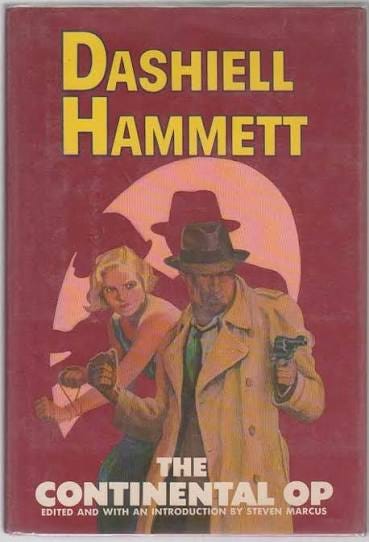
First up is Dashiel Hammett. Hammett wrote 28 Continental Op short stories between 1923 and 1930, but the writing, language, and style mostly feel as relevant and modern as if they were written today. Not all of these stories are masterful pieces of hard-boiled writing, but many of them are. There’s a simplicity of sentence structure and word choices that make these a pleasure to read, and if you want to get the nuts and bolts down on how to plot hard-boiled PI fiction, there are no better examples to study than these stories.
Next, Jim Thompson, specifically, Hell of a Woman, Savage Night, A Swell-Looking Babe, Pop. 1280, and The Getaway. In these noir novels, Thompson broke every rule that you might’ve thought existed in crime fiction. He even used (invented??) techniques that started finding their way decades later into modern horror fiction. When I was first trying to write crime fiction, I’d already read just about everything written by Hammett, Chandler, Cain, Ross MacDonald, and Rex Stout but I still had a constrained/rigid view of how crime fiction had to be written. Stumbling on Thompson’s Hell of a Woman was as close to a religious experience as I’ve ever had. Seeing the chances he took and how he broke every rule that I thought existed in crime fiction but made it work, freed me up to find my own voice, instead of imitating Ross MacDonald (and doing a bad job of it.) I’d also recommend reading Thompson’s short crime story ‘Forever After’. The story is around 5 pages, but what Thompson is able to do in those pages is remarkable. Every creative writing class should study that story.
Finally, Donald Westlake, or more specifically the Parker books he wrote under his Richard Stark alias. These crime heists novels are worth studying for two reasons: (1) where he starts each novel and (2) his economy of language. These novels start at all different points within a heist: the planning, at the start, in the middle, after a double-cross, etc. Studying the different ways Westlakes jumps into each of these novels and how he constructs the plots that follow should be invaluable to anyone writing crime fiction, as should seeing how Westlake seemingly uses the perfect words in each sentence, not using any extra words or extra sentences. A writing class could be offered on “spare writing techniques” by simply studying these novels.
Hi, I just found your site through this post. I really love Hammett and Westlake, but I never read any Jim Thompson. I think it's time for a stroll down to the library. Have you read or written about Ross MacDonald? "The Ivory Grin" is a great story.
Thanks for this post. :)
Those are three of my faves! Elmore Leonard is up there too - his dialogue is so tight and well done. Don Winslow has such a unique style too. And I'd be remiss not to name Dennis Lehane because his work is so literary without getting too caught up in craft.